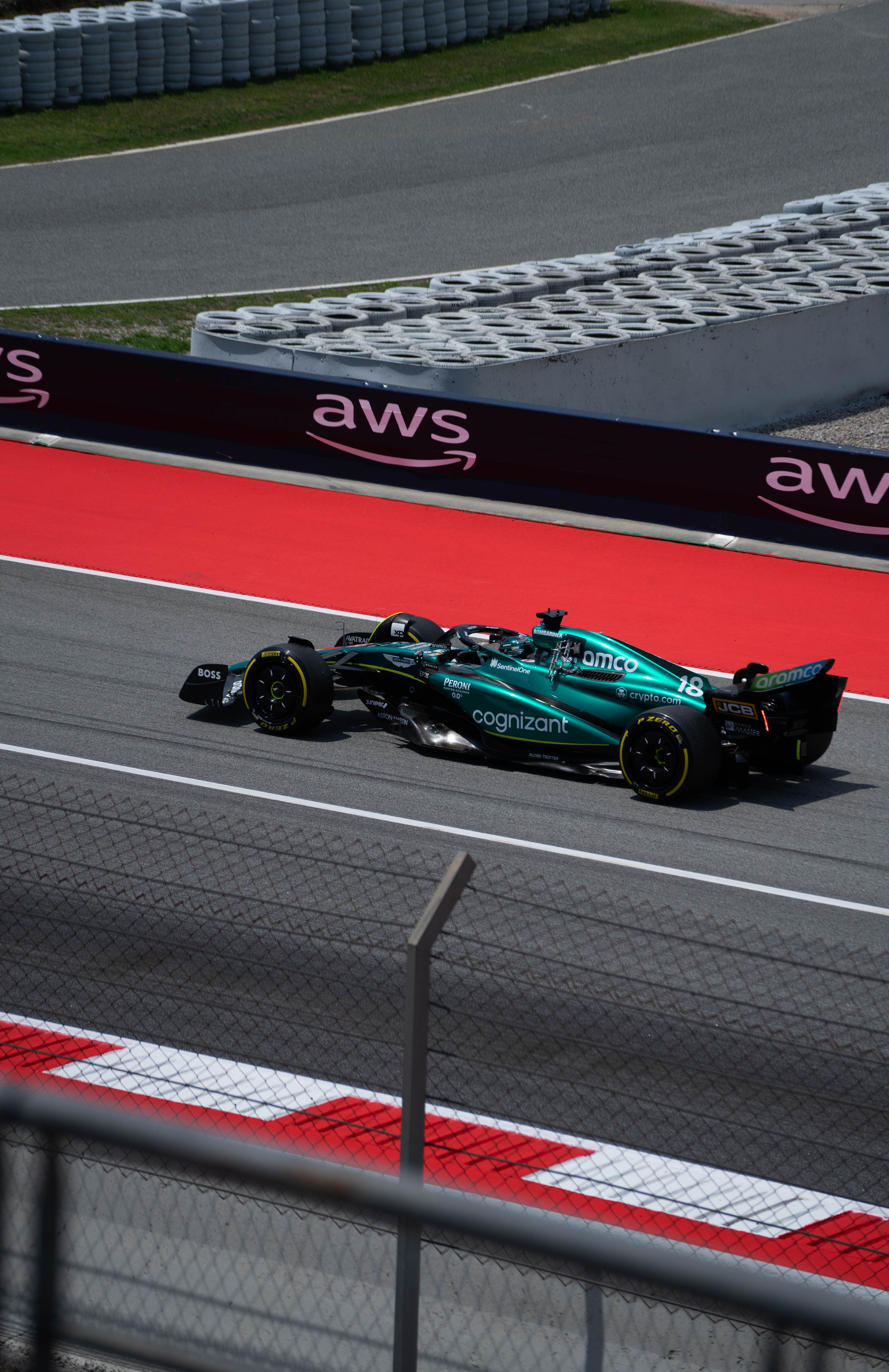

Formula 1 is as much a software competition as it is a physical one. Photo: Jonathan Borba / Pexels
Opinion: Formula 1 Is No Longer a Motorsport—It Is a Software Sport
When most people watch Formula 1, they see drivers pushing machines to the limit. They see overtakes, pit stops, and podiums. What they don't see is the invisible layer of software that makes all of it possible. Every lap is a data stream. Every strategic call is a simulation. Every aerodynamic upgrade is a product of code. At Kamva Digital Systems, we believe F1 is the ultimate case study in why software development is not a support function—it is the competitive edge. And the lessons from the paddock apply directly to your business.
Reason 1: Telemetry—The Data Center on Wheels
A modern Formula 1 car is not just a race car. It is a data-generating machine. Each car carries over 300 sensors that produce approximately 1.1 million telemetry data points per second—covering everything from tyre temperature and aerodynamic behaviour to energy recovery and engine performance[reference:0][reference:1]. Across a race weekend, this amounts to hundreds of terabytes of data that must be streamed, stored, and queried in real time[reference:2].
This is not a trivial engineering challenge. F1 teams solved streaming and data-architecture problems years before most R&D operations even encountered them[reference:3]. The result is a trackside and cloud-based software stack that processes millions of events per second, allowing engineers to make split-second decisions.
Engineers rely on real-time telemetry software to interpret millions of data points. Photo: Jonathan Borba / Pexels
Reason 2: Simulation and CFD—Winning Before the Race Starts
The FIA strictly limits every team to 40 wind tunnel runs and 250 CFD (Computational Fluid Dynamics) tests per week[reference:4]. With no room to waste, software development becomes the tool that extracts maximum insight from every single test. Teams write Python and shell tooling for CFD analysis, automation, and correlation, ensuring that simulation data matches real-world track performance[reference:5][reference:6].
But the most dramatic example of software-driven strategy comes from Monte Carlo simulations. Before a race weekend, Oracle Red Bull Racing runs close to 4 billion Monte Carlo simulations to model almost every possible scenario—safety cars, red flags, slow pit stops, unexpected overtakes[reference:7]. After practice, they re-run billions more with live telemetry data. When the unexpected happens on track, the team has likely already modelled it.
Reason 3: AI Race Strategy—The Algorithm That Coaches Champions
In 2026, AI is no longer a buzzword in F1—it is a race-day decision-maker. Red Bull, in partnership with Oracle, has deployed an agentic AI system that recommends actions to the team during a grand prix[reference:8]. What began as a search tool for regulations and past rulings has evolved into a system that draws on real-time information and recommends strategic moves.
The system proved its worth at the 2025 Italian Grand Prix. On the opening lap, Max Verstappen went off at the first chicane while fighting Lando Norris. The AI agent advised Red Bull to hand the place back to avoid a penalty—a recommendation that went against the team's initial view. Red Bull followed the instruction. Verstappen escaped a penalty, retook the lead, and won the race by 19.2 seconds[reference:9]. That is software development directly translating into championship points.
Other teams are racing to catch up. McLaren is working with Google's Gemini AI, Mercedes has partnered with Microsoft, and Ferrari is collaborating with IBM[reference:10]. The message is clear: the team with the smartest software wins.
Reason 4: The Software Engineering Stack Behind the Grid
So what does an F1 software engineer actually build? The stack is diverse and demanding:
- Languages: Python for data analysis and automation, C# and C++ for performance-critical desktop and simulation applications, TypeScript and React for web-based dashboards[reference:11][reference:12].
- Platforms: Kubernetes, Docker, and CI/CD pipelines spanning on-premise and cloud environments, ensuring that every tool and pipeline works first time because there is no room to waste a test slot[reference:13][reference:14].
- MLOps and DevOps: Platform engineers build and manage the infrastructure that supports software developers and data scientists across the technology department[reference:15].
- Real-time systems: Trackside operations software that processes live telemetry from the pit wall to the factory, enabling decisions in milliseconds[reference:16].
This is not legacy enterprise IT. This is high-performance, low-latency, mission-critical software engineering—the same discipline that separates market leaders from laggards in every industry.
Opinion: Your Business Is Also in a Race—And Software Is Your Engine
The parallels between Formula 1 and modern business are impossible to ignore. F1 teams do not treat software as a cost center. They treat it as the primary lever of performance. They invest in data infrastructure, simulation, AI, and the engineers who build it.
At Kamva Digital Systems, we see the same pattern in the businesses that thrive and the ones that fall behind. The companies that win are not the ones with the biggest budgets—they are the ones that use software to make faster, smarter decisions. Whether you are optimizing a supply chain, automating customer service, or building a real-time analytics platform, the principle is the same: code is the competitive advantage.
Formula 1 has shown us what is possible when software development is treated as a core sport. The question for your business is simple: Are you building software that wins, or software that just participates?
"In Formula 1, milliseconds are won in the code before they are won on the track. In business, the same rule applies."
Ready to put software at the center of your business?
Kamva Digital Systems builds the software, automation, and data platforms that give you a competitive edge.
Talk to Kamva Today
Comments 0
No comments yet. Be the first to share your thoughts!
Leave a comment