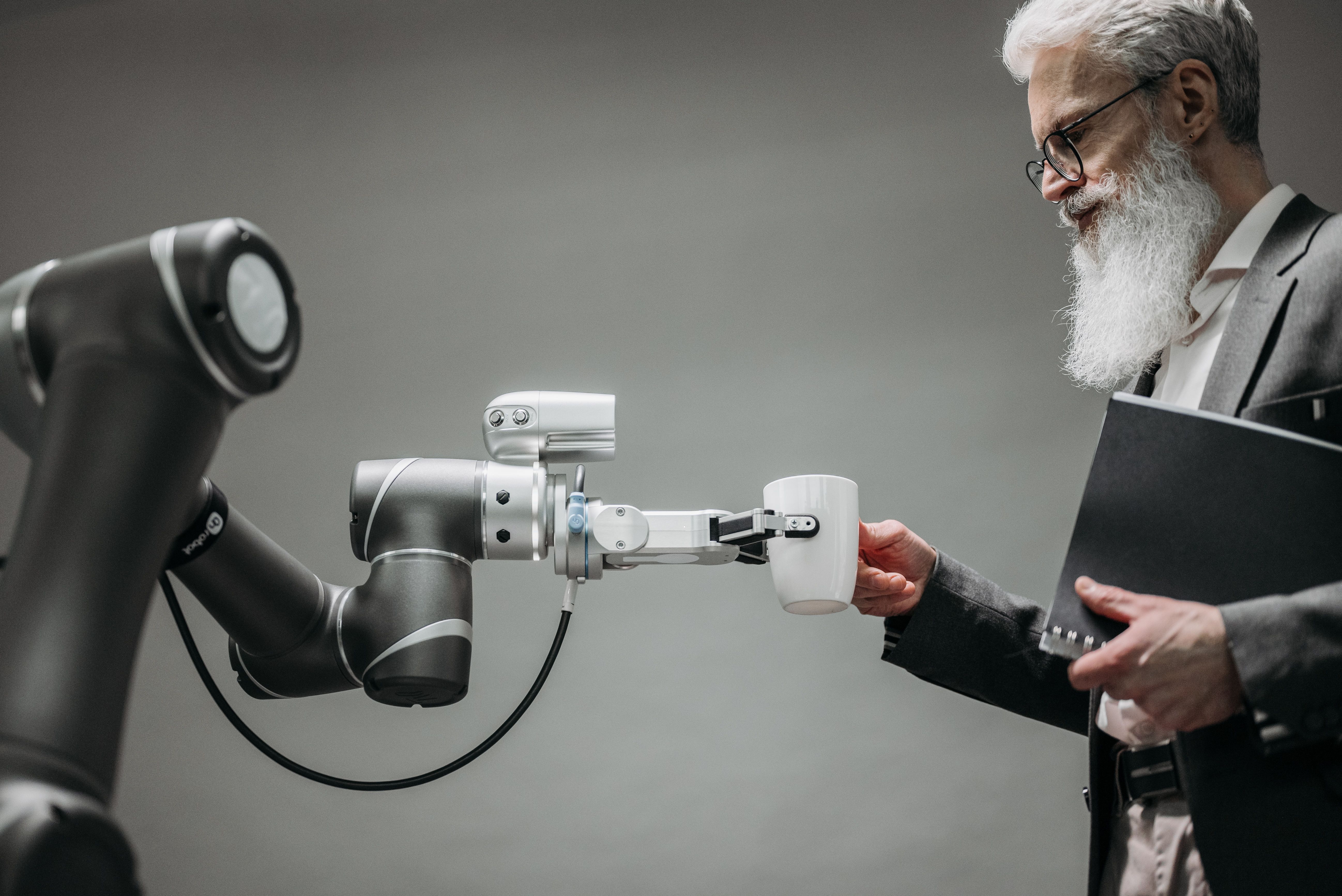
Opinion: The Threat Isn't AI—It's the Person Beside You Using AI
Let's cut through the hysteria. AI is not going to wake up one day and decide to eliminate your job. It has no desires, no ambitions, no grudges. But here's what it will do: it will amplify the productivity of those who know how to use it. Which means if you're competing for a promotion or a contract against someone who leverages AI effectively, and you don't, you lose. Every time. The future of work isn't about AI versus humans. It's about augmented humans versus non-augmented ones. And the gap between them is growing by the day.
Reason: AI Is a Force Multiplier, Not a Replacement
Let's look at what AI actually does. It automates tasks, not jobs. A job is a collection of tasks wrapped in context, judgment, and relationships. AI can write a first draft. It can summarize a meeting. It can generate code. But it can't build trust with a client. It can't navigate office politics. It can't understand the subtle emotional subtext of a negotiation.
What AI can do is handle the repetitive, time-consuming, low-value parts of your job—freeing you to focus on the high-value, human parts. The accountant who uses AI to reconcile invoices in minutes can spend hours analyzing financial strategy. The marketer who uses AI to generate ad variations can focus on brand storytelling. The developer who uses AI to write boilerplate code can architect better systems.
But here's the catch: not everyone will adapt. Studies show that within the same organization, employees who embrace AI tools report productivity increases of 40-60%. Those who resist? They stagnate. And when layoffs come, guess who goes first.
Example: The Two Graphic Designers
Meet Sarah and James. Both are senior graphic designers at the same agency. Both have 10 years of experience. Both are talented.
Sarah embraces AI. She uses tools like Midjourney to generate concept boards in 20 minutes instead of 2 days. She uses AI to resize and reformat assets for different platforms. She uses AI to write copy variations for A/B testing. She now delivers three times the output of her peers, with higher client satisfaction scores.
James refuses to touch AI. He insists on doing everything manually. His work is still good, but he's slow. Clients complain about turnaround times. He's stressed, overworked, and constantly behind.
When the agency restructures, Sarah gets promoted to Creative Director. James is let go. The story isn't "AI replaced James." The story is "Sarah's AI-augmented productivity made James's inefficiency impossible to ignore."
Opinion: The Time to Adapt Is Now—Not Tomorrow
At Kamva Digital Systems, we tell our clients the same thing: AI adoption is not optional. It's the new literacy. And like any literacy, the earlier you start, the more fluent you become. The people and companies that thrive in the next decade won't be the ones with the biggest teams—they'll be the ones with the most empowered ones.
So stop asking, "Will AI take my job?" Start asking, "How can AI make me so valuable that I become untouchable?"
"AI won't replace you. But a person using AI will. Choose your side."
Comments 0
No comments yet. Be the first to share your thoughts!
Leave a comment